Generative AI images, discernment and the fragmentation of reality
We are being flooded with generative artificial intelligence images. How do we even know what is real anymore?
In my corporate design job, I was an early adopter of generative AI images. As a professional designer, it was a constant effort and sometimes struggle to find exactly the right image for a client’s job. In my career, I had spent countless hours searching on stock photography sites for the photo or illustration that ticked all the boxes: suitable orientation of the image, exactly the right content in terms of people and representation, the right lighting and right time of day, nothing in there that was not suitable to the client’s messaging. Sometimes it was necessary to, painstakingly and painfully, remove or insert elements manually using Photoshop. If I had to create an illustration from scratch, usually starting with a hand-drawn sketch that then was digitised, cleaned up and coloured, it would take hours and hours, perhaps days to create an approved illustration.
Then generative AI comes into my orbit in 2023, available to use directly in my design software or easily accessible on stock sites I use and it is like freaking magic! Mindblowing! With writing suitable prompts and a bit of patience and tweaking, I can source an image that is absolutely perfect for the job, usually in a fraction of the time spent before. And the images were beautiful in terms of the saturation of the colour and the contrast. I was astounded at the quality of the textures and facial expressions and lighting. It really did seem like magic. OK, hands were a mess – hands are superhard to draw, and AI could not figure it out. Six or more fingers per hand, crazy placement. Sometimes the AI came up with bizarre and hilarious scenarios. But there was nothing that I could not fix by either rewriting the prompt or some manual intervention. To me, now, it seems like we had a little golden age of generative AI. It was still new enough that there was not a lot of use in the wild, and when it was being used, it seems it was being used by designers like me and artists that were curating high quality output.
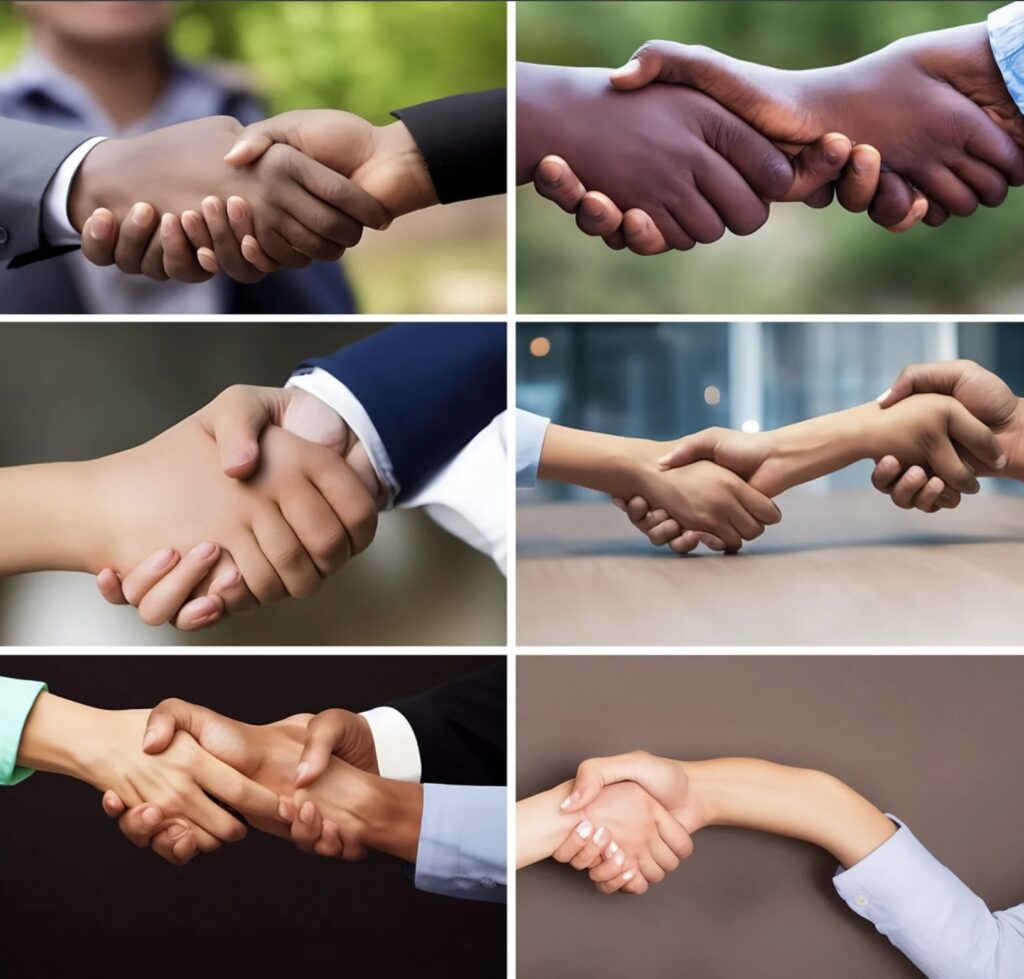
AI hands in the early days of generative AI. Buckle up Buttercup, things are about to get wild!
Some images were hilarious, a lot were gorgeous. We were having A TON of fun with them. Designers and artists were amazed at the possibilities that suddenly opened up before them in terms of speed of creation, being able to change the style of a rendering with one click. What had taken us days, weeks to produce before, now took mere minutes or hours when we really took time to get it perfect. I miss those days. We were so joyous, so hopeful. I was of the firm opinion that generative AI was going to make everything better. For designers, for artists, for clients – all consumers of beautiful images.
And then came the Enshittification of Generative AI.
The first thing that started worrying me was when I saw how many AI image generators were popping up everywhere. It was no longer in the hands of designers and artists that really cared about the output and made sure it still had value and integrity. I remember, in 2024, looking for a specific image for a client and stumbling onto one of the ever-increasing number of sites that were popping up and the sheer volume of ready-made images made my jaw drop. A lot were good quality in terms of composition and colour but there were also a lot of images that were of poor quality – over-the-top placement of objects (just too many things), AI artifacts (when there are inexplicable visual elements in an image) and illogical application of scale.
The era of AI slop had begun. And then, suddenly, it was everywhere.
The thing that made it so magical in the beginning – the speed with which an image could be created – became the seed of it’s downfall. Suddenly anyone at all could create a literal avalanche of images, in no time at all. I thought about the painters through the history of mankind that created images by hand, taking weeks or months to create a single image on canvas. The oil on canvas portraits we see hanging in art museums that have survived for hundreds of years. Still lives painted by masters of their craft that to this day, instill the observer with awe and a sense of gravitas. Wood block prints from Japan and China that defy our understanding of what can be achieved with the medium in terms of depth and emotion conveyed. The value of those images… it is priceless. What is the value of these images that can now be produced in a split second?
Now AI images meet us wherever we go. Social media, to me and my opinion, has become a cesspit of AI slop images and videos – to the extent that I’ve started avoiding it altogether. Already, only after a couple of years, there is a sense of hopelessness among people because they cannot tell whether an image is real or has been created by generative AI. People are being fooled, being scammed because they cannot tell the difference. I consider myself an expert on the creation of images – I have been an artist and designer for 40+ years – and I find myself being unable to tell sometimes whether or not an image or video is real or AI.
And this brings me to the fragmentation of reality.
I was talking to a friend about how we, as a human collective, are inundated with stimulus. The demands for our attention and action are constant and urgent. Our devices and the media are continually notifying, beeping, shouting. We spoke about how, if one could bring a human being from the past – say from one hundred years ago – into this future, that probably their brains would explode. Probably on a physical level, their bodies would not be able to withstand the electromagnetic waves. On a psychological and emotional level, they would not be able to process the enormous flood of information and stimulus coming at them – can you imagine! But we are not so different from a human that lived a hundred years ago. We are almost exactly the same in terms of our physiology but we are now expected to deal with an exponential increase of information, in an exponentially more complex world, in less time.
At the same time that we cannot believe our eyes anymore.
Before we would say “I’ll believe it when I see it,” and “seeing is believing.” We implicitly trusted the information our eyes gave us to form our realities. Pre-2023 we trusted images. Of course there were faked images around, but they were comparatively few and far between, and someone with a trained eye and experience in creating images could spot a fake relatively easily. We based our knowledge of the world and ourselves on these images that we trusted. We were safe. Now we cannot trust images, we are not safe to believe something when we see it. How does that affect the way we view our reality?
I don’t have the answer, of course. This is an unfolding process, in front of our very eyes. In myself, I feel a desire to distance myself from current images. I myself, like so many other people, are already bone-tired of having to question everything I see, whether it’s real or AI-created. I find myself being attracted to pre-AI art and music. Last night I searched for a video on Youtube and as it started playing, it struck me with absolute delight that this was produced before the advent of generative AI and therefore the music and images can be trusted to be human-made.
So perhaps this is our saving grace in these troubled times… reaching back to music and art and design that were produced by humans before AI started contaminating our world. I want to be clear that I am not anti-AI now. I believe that AI has a role to play in the evolution of humanity to a higher level of existence. But I don’t agree with the way it was deployed – it was done too hastily and without enough foresight and the necessary guardrails. But that is evolution too, isn’t it… it’s messy and chaotic sometimes.
it is my hope that there is a way forward for humanity to co-exist with AI in a dignified and beneficial for mankind manner. Buckle up Buttercup. It’s a rough ride.